
October 1, 2026
Thank you to our alumni community and supporters for joining us! Your dedication to children's mental health inspired us, and we're excited about what we can accomplish together over the next 20 years. 💚



Blog
ARCHIVE

November 13, 2019
The American Academy of Pediatrics (AAP) has released a new policy and an accompanying technical report on mental health competencies for pediatric clinicians. REACH faculty member Cori Green, MD, MS, is a lead author of both documents. We asked Dr. Green, director of behavioral health education and integration at Weill Cornell Medicine in New York City, what the AAP policy and technical report mean for alumni of the REACH program Patient-Centered Mental Health in Pediatric Primary Care. “I hope they’ll be excited to see that what is being endorsed by AAP is essentially what they were taught in their REACH training,” Dr. Green said. In the technical report, the REACH course is described as a promising practice in continuing medical education.
Read Article
October 15, 2019
“When it comes to school refusal, getting all the adults on the same page is the bottom line,” said James Wallace, MD, a REACH faculty member. “Until you have that, you have nothing.” Dr. Wallace, who teaches child psychiatry at the University of Rochester (New York) Medical Center School of Medicine and Dentistry, described an approach to school refusal that unites primary care providers, schools, and mental health professionals in helping families make choices that support regular school attendance. “An evidence-based approach to school refusal, and the anxiety or depression that usually underlie it, includes cognitive behavior therapy and sometimes medication,” said Dr. Wallace. “But there’s a third piece: getting all of the adults involved, including the parents, to address the social-emotional components of school attendance in a consistent way.”
Read Article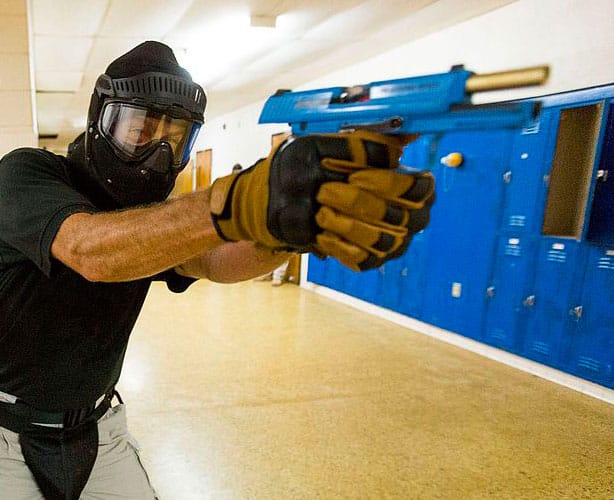
September 18, 2019
According to the National Center for Education Statistics, 92% of public schools had formal active shooter plans in 2016, and 96% conducted lockdown drills. These measures are intended to keep children safe, but they may do as much harm as good. The title of a September 4 New York Times article sums it up: “When Active Shooter Drills Scare the Children They Hope to Protect.” We asked REACH faculty member Jasmine Reese, MD, MPH, about how students react to active shooter drills and what pediatric primary care providers (PCPs) can do. Dr. Reese is Director of the Adolescent and Young Adult Specialty Clinic at Johns Hopkins All Children’s Hospital in St. Petersburg, Florida. “We have yet to see data on whether these drills are causing more anxiety and other mental health issues among students,” said Dr. Reese. “But it seems clear in practice that they can either cause anxiety and depression or exacerbate existing issues.”
Read Article
July 24, 2019
“Going to college is exciting, but students need to know that this experience, though positive, may also be stressful,” said REACH faculty member Elena Man, MD. Dr. Man recommends resources and strategies that pediatric primary care clinicians can use to prepare patients for this significant transition to a new environment for learning, living, and friendships.
Read Article
June 10, 2019
“It’s not just that we’re more aware of adolescent suicide,” said Michael Scharf, MD, chief of child and adolescent psychiatry at the University of Rochester Medical Center and a REACH faculty member. “The rate really is going up. Teen suicide is still rare, but it’s increasing.” Primary care providers (PCPs) can help teens at risk of suicide, first of all, by being willing to talk about it. “Some people think that asking about suicidal ideation makes the kid more likely to act,” said Dr. Scharf. “But evidence shows that asking either has no impact or has a relieving effect; it frees the patient to talk about the issue.” “You need to think ahead of time of what to ask and how, so you feel comfortable,” said Dr. Scharf. “You need a go-to way to assess risk and how likely the kid is to follow through.” (See Resources below.) The assessment results can range from “nothing to do here” to “send this kid to the emergency department.” “The tricky part,” Dr. Scharf said, “is what to do in between.”
Read Article
April 12, 2019
Some pediatric primary care providers (PCPs) are nervous about providing mental health services because they are not sure they can be paid. However much they may want to treat patients with mental health disorders, they can’t afford to practice for free! Evaluation and management of mental health conditions is time-intensive. PCPs wonder, “How can I spend 90 minutes doing intake?” Those who work in large healthcare systems worry about the WRVUs (work relative value units) by which their productivity is judged. Providers in small practices worry about getting paid for visits that involve primarily talk. “Primary care providers absolutely can be paid for mental health care,” said Dr. Eugene Hershorin, a coding expert in the Pediatric Department in the University of Miami Health System and a REACH Institute faculty member.
Read Article
March 25, 2019
“Pediatric primary care providers can have a big impact on child mental health simply because we see children early and often,” said Dana Kornfeld, MD, REACH board member and associate clinical professor of pediatrics at George Washington School of Medicine. Dr. Kornfeld, who practices at Pediatric Care Center in Bethesda, MD, endorses the use of cognitive behavioral therapy (CBT) techniques in primary care to nip potentially crippling anxiety in the bud.
Read Article
February 12, 2019
Alana, age 17, comes into your office complaining that she can’t sleep at night and struggles to stay awake during school. If she can, she sleeps until noon or later on weekends. “Diagnosis of sleep disorders is often easier with teens than with younger children, as long as you ask the right questions,” said Robert Kowatch, MD, a REACH faculty member who is a pediatric sleep expert at Ohio State University Medical Center/Nationwide Children’s Hospital.
Read Article
January 22, 2019
Alana, age 17, comes in complaining that she is tired all the time and struggles to stay awake during school. Or perhaps it’s six-year-old Miko, whose mother tells you that Miko avoids going to bed and often gets up in the middle of the night. Miko says he doesn’t feel sleepy, but his teachers say he is often inattentive and sometimes quarrelsome. The most common sleep problems among young patients are these and other forms of insomnia or insufficient sleep, according to REACH faculty member Robert Kowatch, MD …
Read ArticleFrom sponsoring a full training cohort to funding an individual scholarship, every dollar expands access to evidence-based mental health care in the communities that need it most.
Explore Ways to GiveGet the latest research, training updates, and practical tools
delivered to your inbox. Join thousands of clinicians working to
improve pediatric mental health outcomes.
Follow us on LinkedIn
Thank you to our alumni community and supporters for joining us! Your dedication to children's mental health inspired us, and we're excited about what we can accomplish together over the next 20 years. 💚

Thank you to the dedicated clinicians who joined our inaugural Alumni Conference! It was a wonderful day of learning, connecting, and sharing ideas. It's always heartening to bring our community together, and it continues to inspire…

Suicide prevention is not limited to one setting or one type of clinician. Children and adolescents may first share concerns about their mental health with a trusted pediatrician or primary care clinician, making it especially important…

What happens when primary care clinicians are given more tools to address children’s mental health? This article from Cook Children’s Health Care System shares how REACH training helped equip pediatricians with practical tools to more confidently…
GET IN TOUCH