


BLOG
From the REACH Blog
The latest evidence, clinical insights, and practical perspectives on pediatric mental health — written specifically for primary care clinicians.
Find Articles
x Clear all filters

Your patients need you to talk about race
June 23, 2020
“The first thing clinicians need to know about racism and discrimination is how important it is to talk about it.” Open, honest, and effective conversations about race and racism are crucial to young people’s mental health.
Read Article
Helping patients deal with trauma
May 19, 2020
A medical appointment can be intimidating and scary for a child with a history of trauma. Still, this visit might be the first time a patient shares that they have been sexually or physically abused or that they are terrified to live with their fighting parents during COVID-19. Your role as a primary care provider (PCP) is critical. Your interactions with your patient need to feel safe. As constrained as your time is, you must make every minute count toward establishing a connection.
Read Article
Alleviating coronavirus anxiety
March 14, 2020
We don’t have to tell you that virtually everyone feels anxious about the spread of COVID-19. An appropriate level of anxiety can be helpful if it inspires people to follow CDC recommendations on hygiene and social distancing. An unnecessary level of anxiety, however, can impair both mental and physical health. Many of your patients and families are suffering from unhealthy anxiety–whether they present with possible COVID-19 symptoms or come in for an unrelated complaint.
Read Article
Suicide crisis among Black youth
February 12, 2020
As suicidality among adolescents generally has declined in the past three decades, suicide attempts among Black adolescents have risen, according to a November 2019 article in Pediatrics. A report to the Congressional Black Caucus (CBC) says that rates of suicide death have risen more for Black youth than for any other racial or ethnic group. A growing concern is that Black youth are less likely to report suicidal thoughts but more likely to attempt suicide; Black males are more likely to suffer injury or death as a result. Suicidality is also increasing among younger children. The reasons for these changes are not clear. However, the risk factors for suicidality and underlying mental health conditions among Black children and youth are myriad.
Read Article
Helping patients & families cope with chronic disease
January 27, 2020
In treating young patients who have chronic physical conditions, health care professionals focus — as they must — on alleviating the physical suffering caused by the disease. However, as a graduate of the REACH course Patient-Centered Mental Health in Pediatric Primary Care, you know the importance of supporting the mental and emotional health of young patients and their caregivers. A new article in Pediatrics highlights the importance of mental health care for families dealing with chronic illness.
Read Article
New AAP policy on mental health in pediatric care
November 13, 2019
The American Academy of Pediatrics (AAP) has released a new policy and an accompanying technical report on mental health competencies for pediatric clinicians. REACH faculty member Cori Green, MD, MS, is a lead author of both documents. We asked Dr. Green, director of behavioral health education and integration at Weill Cornell Medicine in New York City, what the AAP policy and technical report mean for alumni of the REACH program Patient-Centered Mental Health in Pediatric Primary Care. “I hope they’ll be excited to see that what is being endorsed by AAP is essentially what they were taught in their REACH training,” Dr. Green said. In the technical report, the REACH course is described as a promising practice in continuing medical education.
Read Article
Building a team to counter school refusal
October 15, 2019
“When it comes to school refusal, getting all the adults on the same page is the bottom line,” said James Wallace, MD, a REACH faculty member. “Until you have that, you have nothing.” Dr. Wallace, who teaches child psychiatry at the University of Rochester (New York) Medical Center School of Medicine and Dentistry, described an approach to school refusal that unites primary care providers, schools, and mental health professionals in helping families make choices that support regular school attendance. “An evidence-based approach to school refusal, and the anxiety or depression that usually underlie it, includes cognitive behavior therapy and sometimes medication,” said Dr. Wallace. “But there’s a third piece: getting all of the adults involved, including the parents, to address the social-emotional components of school attendance in a consistent way.”
Read Article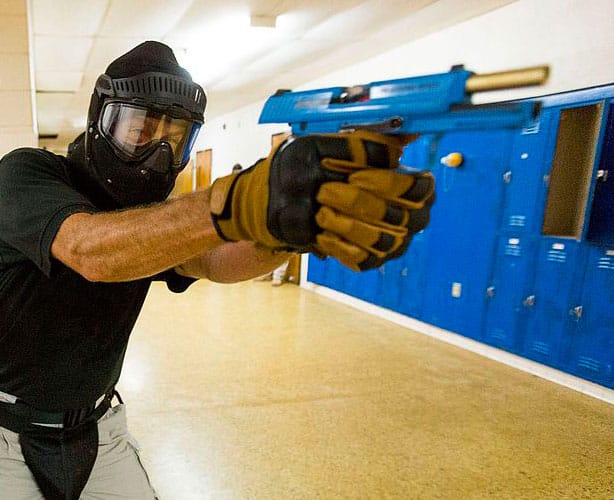
Helping patients deal with school shooter anxiety
September 18, 2019
According to the National Center for Education Statistics, 92% of public schools had formal active shooter plans in 2016, and 96% conducted lockdown drills. These measures are intended to keep children safe, but they may do as much harm as good. The title of a September 4 New York Times article sums it up: “When Active Shooter Drills Scare the Children They Hope to Protect.” We asked REACH faculty member Jasmine Reese, MD, MPH, about how students react to active shooter drills and what pediatric primary care providers (PCPs) can do. Dr. Reese is Director of the Adolescent and Young Adult Specialty Clinic at Johns Hopkins All Children’s Hospital in St. Petersburg, Florida. “We have yet to see data on whether these drills are causing more anxiety and other mental health issues among students,” said Dr. Reese. “But it seems clear in practice that they can either cause anxiety and depression or exacerbate existing issues.”
Read Article
Helping patients manage the transition to college
July 24, 2019
“Going to college is exciting, but students need to know that this experience, though positive, may also be stressful,” said REACH faculty member Elena Man, MD. Dr. Man recommends resources and strategies that pediatric primary care clinicians can use to prepare patients for this significant transition to a new environment for learning, living, and friendships.
Read ArticleEvery Investment Gets More Children the Care They Need
From sponsoring a full training cohort to funding an individual scholarship, every dollar expands access to evidence-based mental health care in the communities that need it most.
Explore Ways to GiveBetter Mental Health Care Starts Here.
Get the latest research, training updates, and practical tools
delivered to your inbox. Join thousands of clinicians working to
improve pediatric mental health outcomes.
Follow us on LinkedIn

Thank you to our alumni community and supporters for joining us! Your dedication to children's mental health inspired us, and we're excited about what we can accomplish together over the next 20 years. 💚

Thank you to the dedicated clinicians who joined our inaugural Alumni Conference! It was a wonderful day of learning, connecting, and sharing ideas. It's always heartening to bring our community together, and it continues to inspire…

Suicide prevention is not limited to one setting or one type of clinician. Children and adolescents may first share concerns about their mental health with a trusted pediatrician or primary care clinician, making it especially important…

What happens when primary care clinicians are given more tools to address children’s mental health? This article from Cook Children’s Health Care System shares how REACH training helped equip pediatricians with practical tools to more confidently…
GET IN TOUCH