
October 1, 2026
Thank you to our alumni community and supporters for joining us! Your dedication to children's mental health inspired us, and we're excited about what we can accomplish together over the next 20 years. 💚



Blog
ARCHIVE

February 15, 2024
After learning about the alarming rise in suicide rates among Black children and adolescents, Brittainy Erby, MD, set out to understand the impact of racial trauma and how to improve pediatric patient care.
Read Article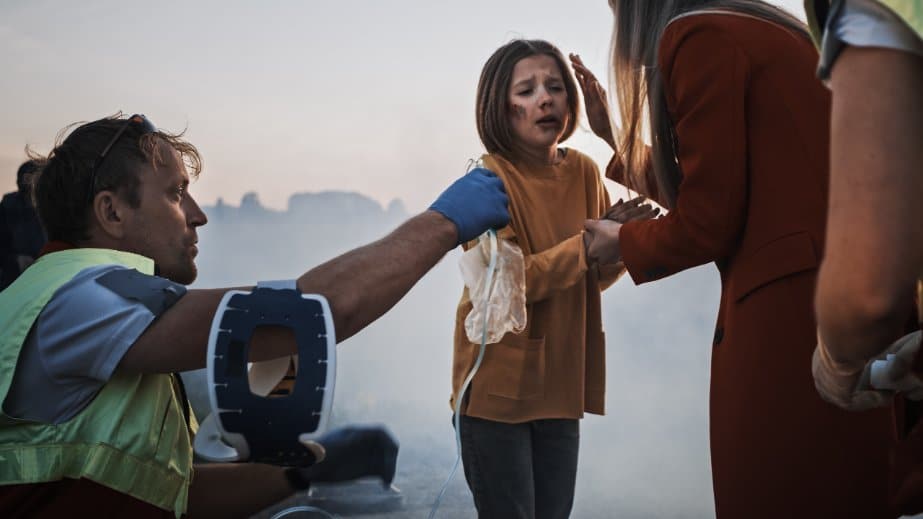
September 20, 2022
“The biggest predictor of having something bad happen to you is having had something bad happen to you in the past,” said Brooks Keeshin, MD. Dr. Keeshin, a child abuse pediatrician and child psychiatrist at the University of Utah, co-developed the new REACH Institute course Addressing Trauma in Pediatric Primary Care. At least 66% of
Read Article
May 25, 2022
In the wake of the Texas school shooting tragedy, your young patients–and their families–may be experiencing anxiety that can affect normal functioning. That anxiety can manifest in many ways, from reluctance to go to school to increased aggressive tendencies. In fact, pediatric primary care providers (PCPs) have been observing the effects of news consumption on their young patients for years now. The spike in anxiety at the beginning of the Covid pandemic is another example. Families may be experiencing trauma as they watch scenes of devastation and displacement in Ukraine. Every act of terrorism or mass violence inspires more fear. The examples go on. As your families’ trusted PCP, you can influence how patients and families deal with anxiety over recent events and the continuous barrage of bad news that characterizes today’s media culture.
Read Article
May 23, 2022
Asked the top three things a pediatric primary care provider (PCP) needs to know about child trauma, Brooks Keeshin, MD, said, “Trauma happens. That’s numbers 1, 2, and 3.” In fact, up to 80% of children experience trauma by the time they are 18. A large body of evidence indicates that childhood trauma affects physical and mental health, both short term and long term. Dr. Keeshin, a child abuse pediatrician and child psychiatrist, is developing a new REACH Institute course to teach PCPs to assess and treat child trauma. “Trauma reactions can look like other mental health conditions,” said Dr. Keeshin. “Traumatic stress can present with symptoms of ADHD, depression, or anxiety. If the pediatrician knows a child has been exposed to trauma, that changes what they do. But first they need to know.”
Read Article
March 21, 2022
In a study sponsored by the Centers for Disease Control and Prevention, 10.8% of adults reported having been physically abused as children, and 11.1% reported psychological abuse. Infants and young children are at greater risk than older children; neglect is more commonly reported than physical, psychological, or sexual abuse, according to the National Child Abuse and Neglect Data System. As a pediatric primary care provider (PCP), you play a vital role in detecting and preventing child abuse and neglect.
Read Article
September 16, 2020
COVID-19 has changed the way children experience the death of a loved one. Although difficult under any circumstance, bereavement is even harder when mourners can’t gather. Barriers to comforting mourning rituals and supportive social communities can make it harder for children to grieve in healthy ways, while increasing the risk for maladaptive grief reactions.
Read Article
July 23, 2020
“Families provide a kind of protective membrane for children when crazy things are happening around them,” said William Saltzman, PhD. Dr. Saltzman is a faculty member of the REACH program Child/Adolescent Training in Evidence-Based Psychotherapies. “Families really have been on the front line throughout the pandemic,” Dr. Saltzman said. “It’s been a rollercoaster ride from the beginning, with abrupt school shutdowns; the exhaustion of becoming the 24/7 caregiver, teacher, playmate, and breadwinner; and now having to figure out largely on their own how to navigate the upcoming school year.”
Read Article
May 19, 2020
A medical appointment can be intimidating and scary for a child with a history of trauma. Still, this visit might be the first time a patient shares that they have been sexually or physically abused or that they are terrified to live with their fighting parents during COVID-19. Your role as a primary care provider (PCP) is critical. Your interactions with your patient need to feel safe. As constrained as your time is, you must make every minute count toward establishing a connection.
Read ArticleFrom sponsoring a full training cohort to funding an individual scholarship, every dollar expands access to evidence-based mental health care in the communities that need it most.
Explore Ways to GiveGet the latest research, training updates, and practical tools
delivered to your inbox. Join thousands of clinicians working to
improve pediatric mental health outcomes.
Follow us on LinkedIn
Thank you to our alumni community and supporters for joining us! Your dedication to children's mental health inspired us, and we're excited about what we can accomplish together over the next 20 years. 💚

Thank you to the dedicated clinicians who joined our inaugural Alumni Conference! It was a wonderful day of learning, connecting, and sharing ideas. It's always heartening to bring our community together, and it continues to inspire…

Suicide prevention is not limited to one setting or one type of clinician. Children and adolescents may first share concerns about their mental health with a trusted pediatrician or primary care clinician, making it especially important…

What happens when primary care clinicians are given more tools to address children’s mental health? This article from Cook Children’s Health Care System shares how REACH training helped equip pediatricians with practical tools to more confidently…
GET IN TOUCH